

|
Home: Low Voltage Lighting
How Low Voltage Lighting Can Transform Your Outdoors
If you've got a deck, patio, landscape, garden or anything you want to show off but don't have the slightest clue about how to approach this monstrous lighting task, keep reading.
What is Low Voltage Outdoor Lighting? In today's market 12 volt incandescent lamps are the most common types of low voltage lamps available, however any system that runs on 50 volts or less is considered low voltage. It is not uncommon in outdoor lighting to use lamps that use 24 volts or even 5.5 volts.
Low Voltage Transformer Normal house current in the United States is in the ballpark of 120 volts, so in order to power low voltage lighting you are going to need some help from a low voltage transformer. A low voltage transformer is a device that converts voltage from it's main source (your home) to be compatible to support lower voltages. Its use allows you to power fixtures, appliances, or anything designed to run off of less voltage without damaging the unit. Adding multiple low voltage lamps on one line is easy. Doing so gives you the flexibility to position your lights however you see fit. Installing outdoor lighting properly should always be done with care.
7 Advantages Of Low Voltage Lighting
Selecting The Best Low Voltage LampLow voltage outdoor lamps come in a variety of small sizes. Thats great news for designers like you and me because we can easily create a clean finished look and hide these fixtures without sacrificing light output.
Buy Quality Fixtures When deciding on which outdoor lighting fixtures to buy don't take the easy way out. Spend the money on quality fixtures, its money well spent. You don't want to be forced to keep replacing parts because you decided to save a few dollars on the front end. Its always best to find a place to mount the fixture that is out of people's view. The idea is to focus attention on what you want people to see, their surroundings not your lighting fixtures. If you can't hide a fixture, try to find one that blends into its surroundings. Lighting manufacturers make a whole slew of fixtures with different finishes. You could match them up to almost any outdoor environment without drawing too much attention them. Because of the wide variety of lamps available, it's easy to customize your project. You can choose any type of beam spread from very narrow and tight to wide and open.
Beam Spread Most narrow and tight beam spreads are used as accent lighting. Maybe you want to draw your guest's attention to a particular object like a sculpture or fountain. A wide beam spread could be used as a form of flood lighting. Because this lighting is so energy efficient, a low voltage flood light would provide a decent amount of light without being too overpowering.
Use it for outdoor garden lighting to accentuate the garden that you love. Be unique, fun, try something new for a change, get inspired. Use lighting to make your outdoors more enjoyable.
|
FREE Newsletter Stay up-to-date with all the latest web updates, news, and outdoor lighting tips! Newsletter Form
|
|
|
|
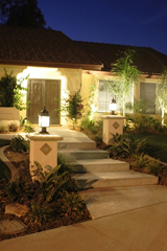 Low voltage lighting is your ticket to a lighting masterpiece.
 Outdoor Spaces
Fixtures & Uses
- Lighting Fixtures
- Low Voltage Lighting
- Party Lighting
- Wedding Lighting
- Decorative Lighting
- Solar Lighting
Installation & Design


Always consult with a licensed electrician before attempting any outdoor lighting work contained in this website.
Build your own site with Site Build It! | Copyright©2008 www.Creative-Outdoor-Lighting.com
Get your own custom template